
Stormwater Management
March 14, 2026
All that snow is turning to water. If it’s pooling in your yard or leaking into your basement, here’s what to know.

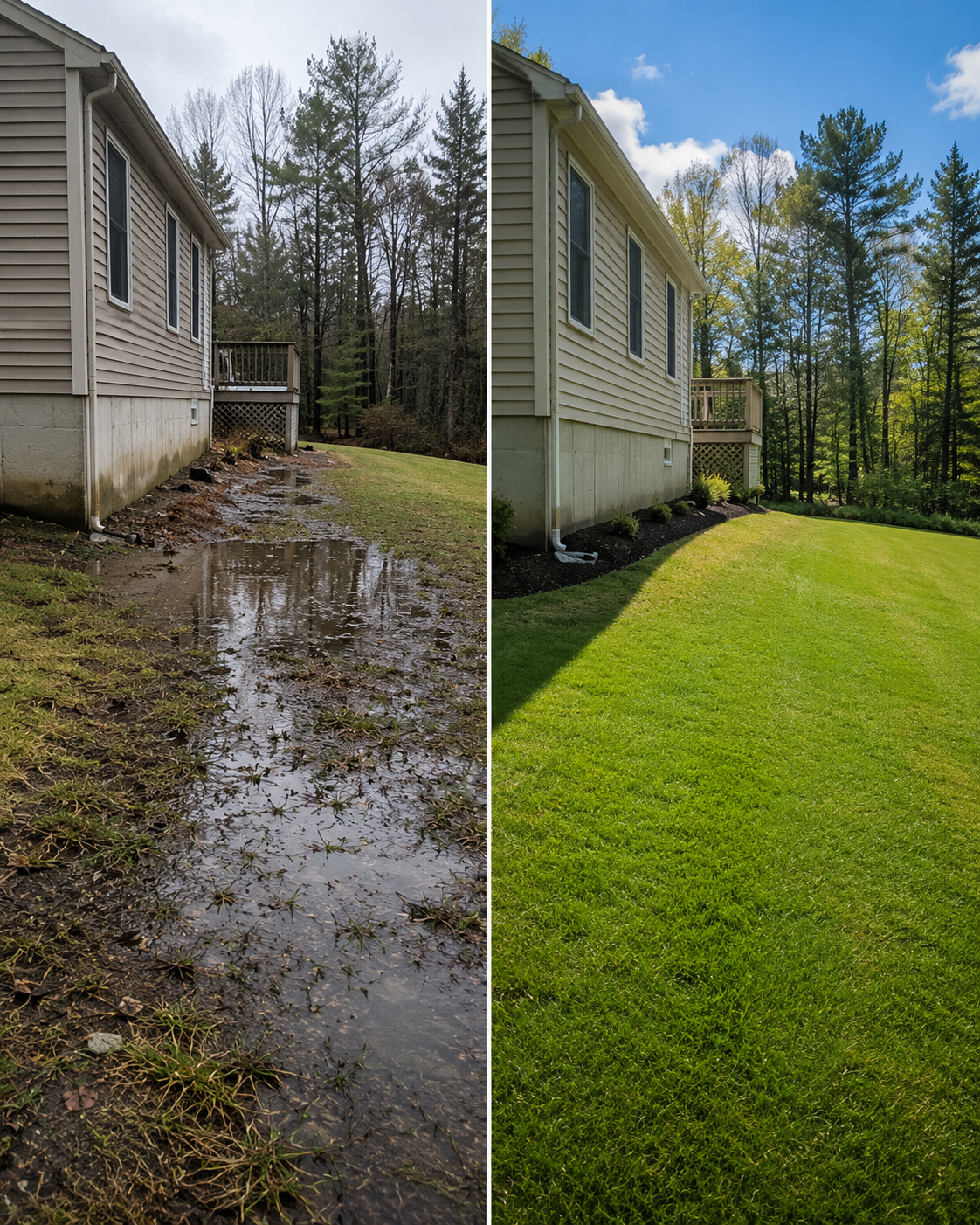
When most homeowners think about their yard, they focus on how it looks—lush grass, clean edges, and usable outdoor space. What often gets overlooked is the foundation of it all: how the land is graded.
Proper yard grading isn’t just a technical detail. It plays a critical role in how your property handles water and how functional your outdoor space is day to day. Done right, it protects your home and makes your yard more enjoyable. Done wrong, it can lead to standing water, unusable areas, and long-term damage.
Here’s what you need to know.
Yard grading is the process of shaping the slope of your land to control how water flows across it. Ideally, your yard should gently slope away from your home’s foundation, directing water toward safe drainage areas.
Even subtle grading issues can cause water to move in the wrong direction—or not move at all.
In New Hampshire, where snowmelt and seasonal rain can dump a significant amount of water onto your property in a short time, proper grading becomes even more important.
The most important function of grading is water control. Without it, your yard has no system for managing runoff.
A properly graded yard helps:
Think of grading as your yard’s first line of defense. If water is directed correctly from the start, you avoid needing more complex (and costly) solutions later.
Beyond drainage, grading has a direct impact on how usable your yard actually is.
An uneven or poorly sloped yard can limit how you use your outdoor space. Soft, soggy areas make it difficult for kids to play, for patios to stay level, or even for basic lawn maintenance.
When grading is done correctly, you get:
For homeowners investing in their outdoor space—whether it’s a simple lawn or a full backyard setup—grading is what makes everything else work better.
Many grading issues develop over time due to settling, erosion, or past construction work.
You may need regrading if you notice:
These issues don’t just affect appearance—they’re early indicators of larger problems forming beneath the surface.
While minor adjustments can sometimes be handled with basic landscaping, effective grading requires a clear understanding of slope, soil composition, and water flow patterns.
A professional approach ensures:
Done correctly, grading is a one-time fix that delivers long-term results.
Your yard should do more than look good—it should function properly in all conditions. Proper grading is what allows that to happen, keeping your property dry, stable, and usable throughout the year.
R.E. Freeman helps homeowners across Southern New Hampshire correct grading issues and create yards that are built to handle New England weather. Whether you’re dealing with water problems or simply want a more functional outdoor space, the right grading plan makes all the difference.
Ready to improve your yard from the ground up?
Request a quote today—fast, free, and with no pressure.


March 14, 2026
All that snow is turning to water. If it’s pooling in your yard or leaking into your basement, here’s what to know.
March 9, 2026
Watch for these septic failure warning signs in New Hampshire. Learn when replacement is needed and what homeowners should do next.
Ready to work with us?
Reliable excavation, drainage, and utility services for homes, businesses, and municipalities — built right and built to last. Contact us today.


Copyright © R.E. Freelman LLC | Designed By July Grey