Between rapid snowmelt and steady spring rain, your yard is put to the test.

March 14, 2026
3 Min
March 14, 2026
In New Hampshire, snow doesn’t just disappear in the spring.
It turns into water. A lot of it.
When temperatures rise in March and April, melting snow combined with spring rain creates a massive amount of runoff. That water has to go somewhere, and if your property does not drain properly, it often ends up pooling in your yard, pushing toward your foundation, or backing up near your driveway.
If your lawn turns swampy every spring or you notice water building up around your home, here are three warning signs your yard could flood when the snow melts.
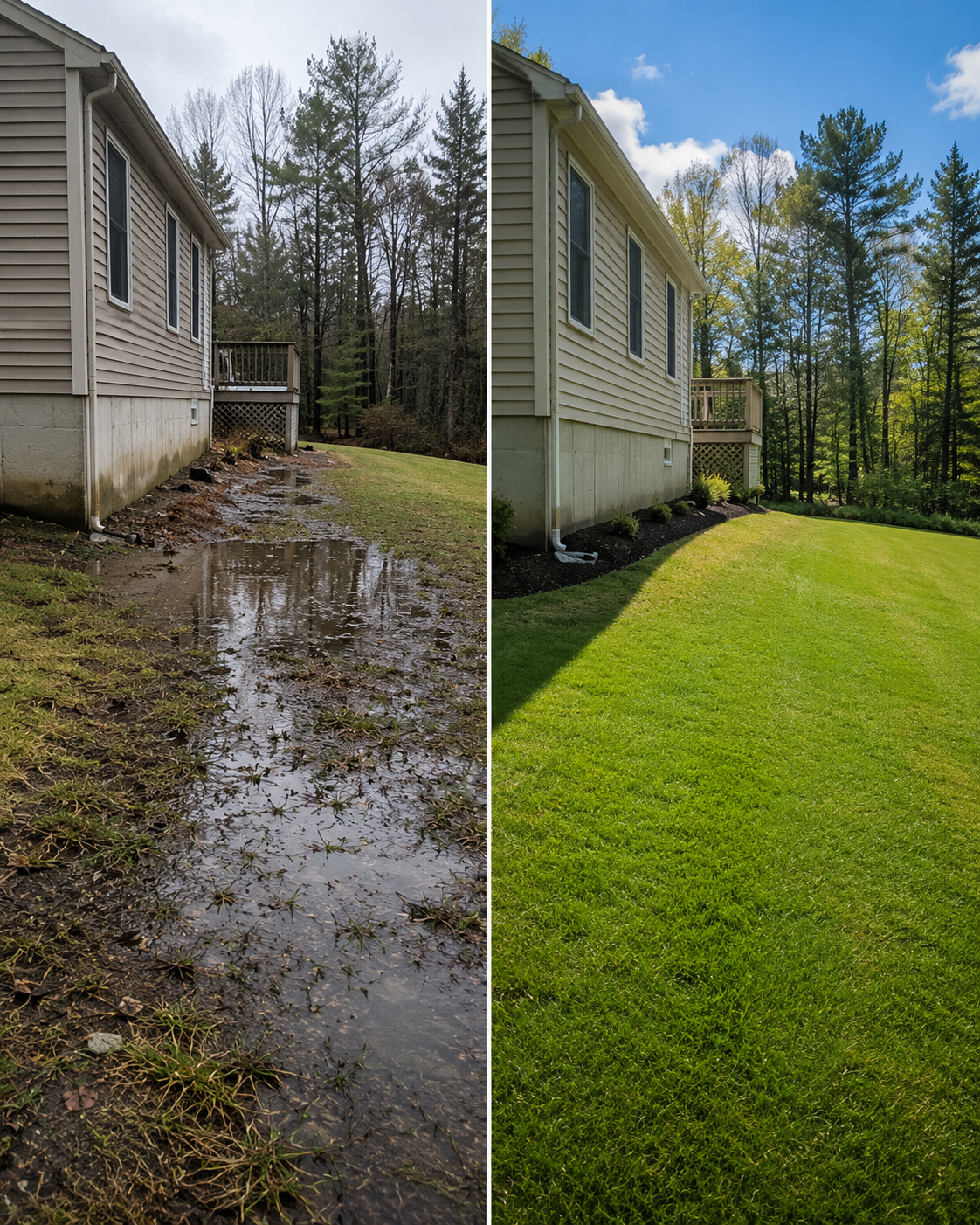
One of the first signs of a drainage problem is water sitting in your yard long after the snow melts.
This happens because the ground underneath is often still frozen, preventing water from soaking into the soil. Instead, it collects on the surface and flows toward the lowest points of your property.
You may notice:
• Soggy or spongy grass
• Puddles that stay for days
• Water collecting near your home
In many cases, this means your yard needs proper drainage installed, such as a French drain system to redirect water away from problem areas.
Your yard should always slope away from your home, but over time soil settles and landscaping changes.
When that happens, snowmelt starts flowing toward your foundation instead of away from it.
This can lead to:
• Basement moisture or leaks
• Damp crawl spaces
• Water sitting along the foundation
A common solution is regrading the yard so water naturally drains away from the home before it has a chance to cause damage.
Many homes have a culvert pipe under the driveway that carries water from one side of the property to the other.
Older culverts are usually made of galvanized steel, and over time they rust out from the bottom. When that pipe collapses or becomes clogged, melting snow has nowhere to go.
This often causes:
• Water pooling near the driveway
• Ice buildup during winter
• Erosion around the driveway edges
Instead of digging up the driveway, R.E. Freeman can repair these pipes using a trenchless method called sliplining, which installs a new pipe inside the old one.
It is faster, less invasive, and often far more affordable than a full replacement.
If you are seeing these warning signs, it is better to address the issue before heavy snowmelt and spring rain arrive.
R.E. Freeman helps homeowners across Southern New Hampshire solve drainage problems with:
• French drain installation
• Yard regrading to move water away from homes
• Trenchless culvert repair using sliplining
Our team understands the drainage challenges caused by New Hampshire snowmelt, frozen ground, and seasonal runoff.
We will walk your property, identify the issue, and recommend the right solution.
Schedule your free site visit today before the snow finishes melting.


Between rapid snowmelt and steady spring rain, your yard is put to the test.
March 9, 2026
Watch for these septic failure warning signs in New Hampshire. Learn when replacement is needed and what homeowners should do next.
Ready to work with us?
Reliable excavation, drainage, and utility services for homes, businesses, and municipalities — built right and built to last. Contact us today.


Copyright © R.E. Freelman LLC | Designed By July Grey